
New shit has come to light…
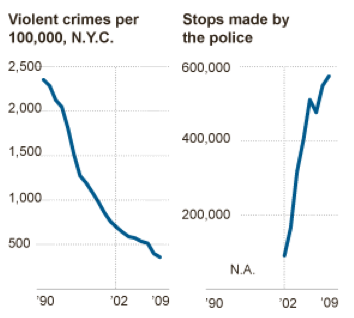
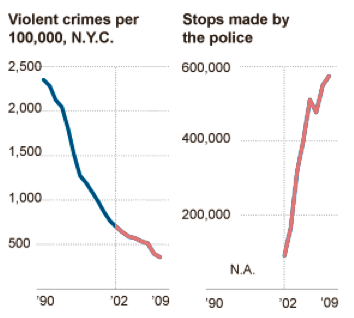
So the Washington Post’s 2-years-in-the-making series on the crazy house that is our intelligence operations was launched yesterday. Lots of interesting facts, including the estimate that there are 854,000 people with Top Secret clearance, the highest of the three standard categories of classified intelligence: Every day across the United States, 854,000 [nearly 1.5 times as many people as live in Washington, D.C.] civil servants, military personnel and private contractors with top-secret security clearances are scanned into offices protected by electromagnetic locks, retinal cameras and fortified walls that eavesdropping equipment cannot penetrate. A standard definition of Top Secret: “Top Secret” shall be applied to information, the unauthorized disclosure of which reasonably could be expected to cause exceptionally grave damage to the national security. Sounds like a pretty exclusive club, or should be right? If you were to take all of the government employees who might be within a football’s field distance from a piece of “Top Secret” paper…including everyone who works at the Pentagon, CIA, NSA, all active duty military officers, etc. from lowest ranking clerk to top chief, that’d equal to about that 800K number, right (*see footnote)? Here’s some numbers, taken from Wikipedia and other similarly take-with-a-grain-of-salt sources (some agencies have their payrolls classified): So, if Excel is correct, subtracting the usual suspects and then some, there are still more than 260,000 people out there with access to secrets that could cause “grave damage” to our country. But I guess if we’ve got solid security standards applied across all the bureaucracies, it’s not like some barely-old-enough-to-legally-drink-maybe-emotionally-insecure-kid, who happened to be given top secret clearance, could waltz into a classified network system by pretending to listen to Lady Gaga and download anything critical, right? * Footnote: My count doesn’t include private contractors, some of which do legitimately need top secret clearance. But I believe that’s the point of the WaPo piece, that our intelligence infrastructure has become so bloated and convulutedthat even if you were to wildly overestimate the number of government employees who need top secret clearance, you’d still have hundreds of thousands of other people, including contractors, if the WaPo estimate is on the mark. Read their Top Secret America series for even more disturbing implications. Update: This redditor said “I find it amusing that an article about misleading graphics uses a misleading graphic of its own,” when in fact, my edited graphic was not misleading, it was just wrong. Corrected now. This is a week old, but still worth revisiting for just ‘what-the-Fourth-Amendment’ kicks: Until last week, the New York Police Department was allowed to not only stop-and-frisk just about anyone for reasons as vague as “furtive movement” , but store each friskee’s personal info in a personal database. The New York Times puts out an overlay of the NYPD’s stop-and-frisks citywide on top of a Google Map, making it easy to see how many times (mostly male minorities) were stopped on your street. Below the fold is this interesting, awe-inspiring graphic. On the left is violent crimes per 100,000 in NYC. At the right is the number of stops made by police. Graphic: NYT Next to each other, just after breakfast on a Monday morning, the sharply declining and climbing graphs seem to imply that, hey, even if the stop-and-frisks are an invasion of the truly innocents’ privacy, a wedge between cops and the neighborhoods they patrol, and quite possibly, a waste of time, it does seem that crime has dropped pretty quickly, even as stops increased to nearly 600,000 in 2009. But wait, the stops-graphic is only plotted from 2002 to 2009, whereas the violent crime rate goes back to the Giuliani era. To be fair to the NYT, they do use the same time scale, but at a glance on a graphic-busy page, it’s easy to miss that. Also, in the NYT’s favor, if you did notice the difference in plotting lengths, it really drives home the lack of correlation. Using the stops-graphic and the related story, we estimate there were about 97,000 stops in 2002, and 580,000 stops in 2009, resulting in a nearly 600% increase in an eight year span, or about 75% a year. The violent-crime rate graphic appears to go between 700/100k in 2002, to 400/100k in 2009…which is about a 43% drop over eight-years, or roughly 5.4% per year. And to get this amazing return-on-investment, all you have to do is sacrifice a little of the community’s goodwill towards the police, a likely consequence when stopping people for things like spitting on the sidewalk. Other fun facts. “Furtive movement” was the reason for about 44% of the stops (“Bulge” was a reason in 9.5%). A 40+% drop in the violent rate of crime is nothing to sneeze at, even over 8 years. In retrospect, though, it makes the NYT’s dataline choice even more justifiable: that 40 percent drop came after what looks like a 340% drop in crime over a 12 year period. In any case, the country is, for better or worse, based on certain principles that limit police power even if stopping and frisking everyone who walks out their door could result in a drop in crime. From another story, 9 in 10 people stopped were not accused of anything. And yet, just being stopped was reason enough to have your name and address stored into a permanent police database even, to repeat again, if you were completely innocent and just happened to be judged by the police to have “furtive movements” or a “bulge”. Last week, though, Gov. Paterson signed a law stopping the storing of innocents’ personal info: “There is a principle – which is compatible with the presumption of innocence, and is deeply ingrained in our sense of justice – that individuals wrongly accused of a crime should suffer neither stigma nor adverse consequences by virtue of an arrest or criminal accusation not resulting in conviction,†Mr. Paterson said. You’ve either shipped, or you haven’t. You’ve either poured weeks, months or even years of your life into bringing a product or a service into the world, or you haven’t…If you’re lucky, enough happens…And if you’re not, all the tradeoffs you made will turn out to be in the wrong direction, and all the bugs and issues that you hoped would be discovered by no-one will be discovered by everyone. But whatever you do next, you’ve shipped. You’ve joined the club. And the next time someone produces an antenna with a weak spot, or a sticky accelerator, you’re more likely to feel their pain, listen to their words and trust their actions than the braying media who have never shipped anything in their lives.
As my boss retweets…”Um dude the media ship CONSTANTLY”. Something Tom Taylor should know, since his group claims to have the BBC and something novel called the “Newspaper Club” in its project list. But of course, the bigger problem with Taylor’s short essay is that it seems to boil down to: “Hey, it’s more important to push something out the door, even if certain flaws may result in horrible, fiery deaths for your users. Because being part of “the club” is what matters. Wow. Taylor’s and his group’s software sounds really interesting. But let’s hope he’s not in charge of anything important. Contrasting testimony in the New York Times’ story on the Danziger Bridge shootings: “The federal government has clearly forgotten or chosen to ignore the circumstances police officers were working under and clearly chose not to factor in any of those circumstances when they decided to charge them with an intentional act of murder,†[lawyer] Mr. Eric Hessler said in an interview.
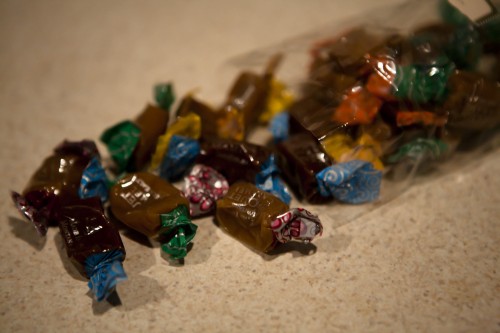
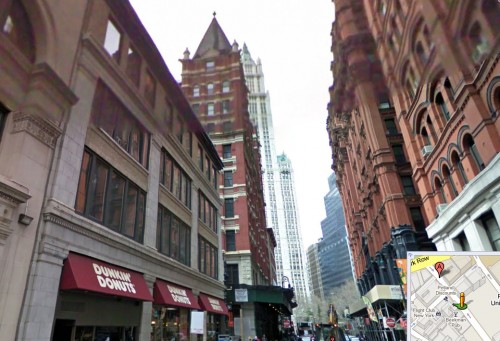
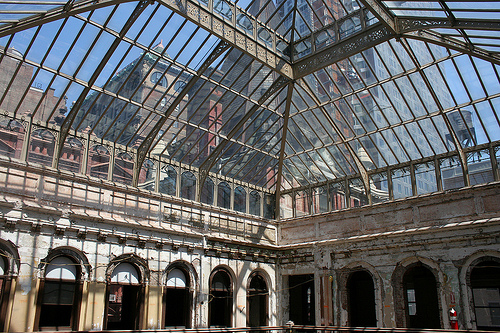
Some officers then traveled to the other side of the bridge and found two brothers, Ronald and Lance Madison, who were on their way to check on a dentist’s office that belonged to their oldest brother, Dr. Romell Madison. According to the indictment, Mr. Faulcon then shot Ronald Madison to death with a shotgun. Afterward, it continues, Sergeant Bowen kicked and stomped on Mr. Madison as he lay dying on the ground. Where Rush Limbaugh used to lay his weary head, after fighting for the average, struggling American …by that, I mean of course, they rip on those damn elitist, pot-smoking, sodomy-loving liberals, including first-year unionized teachers and comparative literature grad students “working” as community organizers, who must all have multi-million dollar Upper West Side apartments of their own, which they bought by ruthlessly taxing hard-working, salt-of-the-earth people like Rush. From the Wall Street Journal, (Limbaugh Gets Mega Millions on Condo Sale) my highlights added: In all seriousness, though, it never made sense why he would keep such a luxury suite in a city he only spends 15 days a year in. New York City is the gilded embodiment of the left-wing gun-hating, anti-God mindset that Rush and his listeners hate, how could he in good conscience continue to supply this anti-capitalist city’s coffers with his riches? I have a good friend who hated the idea of tax revenue from gainful employment being used to fund wars, so he chose living at home to take care of his parents and grandparents; can’t Rush at least find a low-tax, conservative mecca that meets his luxurious cultural (but, of course, totally American and patriotic and old-fashioned moral) tastes? Personally, I don’t have a problem with Rush living high-on-the-hog with the money he made off of his listeners…it’s just kind of an odd way to show those liberals how an honest man lives. Also, if his fans had heard a story about Al Gore owning a gold-leaf ceiling apartment that he lived in only 15 days of the year, I doubt they’d congratulate him for all the money he made off his global warming slideshow. Hey, I found Bequet Caramels in New York City! Do you want to know where to buy Béquet Caramels, hand-made caramels from Montana, in New York/Manhattan? Well if you tried Googling it, you would’ve been very hard-pressed to find a useful result. Luckily, I did find this blog entry from Chelsea Market Baskets which talked about them (they’re sold for $18 a pound, or 50 cents apiece). Why the big deal? My roommate thinks they’re the best caramels ever and it was her birthday, and I spent the better part of my free time trying to find the damn things. Hopefully, the next New Yorker to Google the location will have an easier time. Or maybe Bequet will, in the section of their website where they brag about being sold at 650 stores, will put a damn list of said locations. Convincing the editors to use this as the lede image for the redesign was my most visible contribution Been stuck at the office for the past couple of weeks, but it’s been worth it. Helped with ProPublica’s redesign, which we did in conjunction with Mule Design Studio. Our journalism has always been top notch, but the site didn’t quite look the part. Now it does. As my boss writes, “Our goal is simple: For the design of our site to match the sophistication of our reporting.” The taste of a french fry is largely determined by the cooking oil. For decades McDonald’s cooked its french fries in a mixture of about seven percent cottonseed oil and 93 percent beef tallow. The mixture gave the fries their unique flavor — and more saturated beef fat per ounce than a McDonald’s hamburger. In 1990, amid a barrage of criticism over the amount of cholesterol in its fries, McDonald’s switched to pure vegetable oil. This presented the company with a challenge: how to make fries that subtly taste like beef without cooking them in beef tallow. A look at the ingredients in McDonald’s french fries suggests how the problem was solved. Toward the end of the list is a seemingly innocuous yet oddly mysterious phrase: “natural flavor.” That ingredient helps to explain not only why the fries taste so good but also why most fast food — indeed, most of the food Americans eat today — tastes the way it does. Malcolm Gladwell of the New Yorker apparently wrote about the same subject area in 2001, concentrating more on McDonald’s attempts to make healthier versions of its food (remember the McLean? (sub-parenthetical thought: there’s far fewer Googlable articles about the McLean than I thought there would be, given its notoriety)) My favorite part of Schossler’s article is his exploration of the flavor chemical industry, by which one drop of something like methyl-2-pyridyl ketone can make a jelly-bean taste like popcorn. Some excerpts: A nose can detect aromas present in quantities of a few parts per trillion — an amount equivalent to about 0.000000000003 percent…The quality that people seek most of all in a food — flavor — is usually present in a quantity too infinitesimal to be measured in traditional culinary terms such as ounces or teaspoons. The chemical that provides the dominant flavor of bell pepper can be tasted in amounts as low as 0.02 parts per billion; one drop is sufficient to add flavor to five average-size swimming pools. The flavor additive usually comes next to last in a processed food’s list of ingredients and often costs less than its packaging. Soft drinks contain a larger proportion of flavor additives than most products. The flavor in a twelve-ounce can of Coke costs about half a cent. How to make something taste like a strawberry: A typical artificial strawberry flavor, like the kind found in a Burger King strawberry milk shake, contains the following ingredients: amyl acetate, amyl butyrate, amyl valerate, anethol, anisyl formate, benzyl acetate, benzyl isobutyrate, butyric acid, cinnamyl isobutyrate, cinnamyl valerate, cognac essential oil, diacetyl, dipropyl ketone, ethyl acetate, ethyl amyl ketone, ethyl butyrate, ethyl cinnamate, ethyl heptanoate, ethyl heptylate, ethyl lactate, ethyl methylphenylglycidate, ethyl nitrate, ethyl propionate, ethyl valerate, heliotropin, hydroxyphenyl-2-butanone (10 percent solution in alcohol), a-ionone, isobutyl anthranilate, isobutyl butyrate, lemon essential oil, maltol, 4-methylacetophenone, methyl anthranilate, methyl benzoate, methyl cinnamate, methyl heptine carbonate, methyl naphthyl ketone, methyl salicylate, mint essential oil, neroli essential oil, nerolin, neryl isobutyrate, orris butter, phenethyl alcohol, rose, rum ether, g-undecalactone, vanillin, and solvent. The difference between natural and artificial flavors: A natural flavor is not necessarily more healthful or purer than an artificial one. When almond flavor — benzaldehyde — is derived from natural sources, such as peach and apricot pits, it contains traces of hydrogen cyanide, a deadly poison. Benzaldehyde derived by mixing oil of clove and amyl acetate does not contain any cyanide. Nevertheless, it is legally considered an artificial flavor and sells at a much lower price. Natural and artificial flavors are now manufactured at the same chemical plants, places that few people would associate with Mother Nature. Also, there’s a bit about how food-coloring is about as important as flavor to how humans perceive taste: Food coloring serves many of the same decorative purposes as lipstick, eye shadow, mascara — and is often made from the same pigments. Titanium dioxide, for example, has proved to be an especially versatile mineral. It gives many processed candies, frostings, and icings their bright white color; it is a common ingredient in women’s cosmetics; and it is the pigment used in many white oil paints and house paints. At Burger King, Wendy’s, and McDonald’s coloring agents have been added to many of the soft drinks, salad dressings, cookies, condiments, chicken dishes, and sandwich buns… Flavor researchers sometimes use colored lights to modify the influence of visual cues during taste tests. During one experiment in the early 1970s people were served an oddly tinted meal of steak and french fries that appeared normal beneath colored lights. Everyone thought the meal tasted fine until the lighting was changed. Once it became apparent that the steak was actually blue and the fries were green, some people became ill. Mmmm…burgers…. Grainger had brought a dozen small glass bottles from the lab. After he opened each bottle, I dipped a fragrance-testing filter into it — a long white strip of paper designed to absorb aroma chemicals without producing off notes. Before placing each strip of paper in front of my nose, I closed my eyes. Then I inhaled deeply, and one food after another was conjured from the glass bottles. I smelled fresh cherries, black olives, sautéed onions, and shrimp. Grainger’s most remarkable creation took me by surprise. After closing my eyes, I suddenly smelled a grilled hamburger. The aroma was uncanny, almost miraculous — as if someone in the room were flipping burgers on a hot grill. But when I opened my eyes, I saw just a narrow strip of white paper and a flavorist with a grin. Speaking of flavor, one of the more interesting angles I got out of the New York Times recent investigation into the food industry’s efforts to combat salt limits is how integral that compound is to making many foods taste good, from cookies to coffee. The industry argues that with less salt, they’d need better ingredients to keep a food’s flavor. Good reading if you have even more time to read about food today: Even as it was moving from one line of defense to another, the processed food industry’s own dependence on salt deepened, interviews with company scientists show. Beyond its own taste, salt also masks bitter flavors and counters a side effect of processed food production called “warmed-over flavor,†which, the scientists said, can make meat taste like “cardboard†or “damp dog hair.†…As a demonstration, Kellogg prepared some of its biggest sellers with most of the salt removed. The Cheez-It fell apart in surprising ways. The golden yellow hue faded. The crackers became sticky when chewed, and the mash packed onto the teeth. The taste was not merely bland but medicinal. “I really get the bitter on that,†the company’s spokeswoman, J. Adaire Putnam, said with a wince as she watched Mr. Kepplinger struggle to swallow. They moved on to Corn Flakes. Without salt the cereal tasted metallic. The Eggo waffles evoked stale straw. The butter flavor in the Keebler Light Buttery Crackers, which have no actual butter, simply disappeared. Bon Appetit! Hat-tip to Longform.org; if you haven’t bookmarked this Instapaper-friendly site, do it. It’s made my gratuitous purchase of an iPad almost worth it. A foreign friend points me to this very cool blog, ScoutingNY, which is run by a film locations scout who, having the luxury to appreciate the hidden corners of New York, is kind enough to share them with the rest of us. Some great interior photos of 5 Beekman in downtown Manhattan, an abandoned building I’ve passed by many times without noticing, including what ScoutingNY says is “quite possibly the most beautiful atrium in New York City, rising nine stories overhead”
There are 854,000 people with “Top Secret” Clearance. Who the hell are they? (WaPo’s Top Secret America series)

Total
854,000
Central Intelligence Agency
20,000
National Security Agency
30,000
Defense Intelligence Agency
16,500
Army Military Intelligence
31,800
Office of the Director of National Intelligence
1,500
Every active military officers
224,144
All Pentagon personnel
26,000
All State Dept. personnel
20,000
All of Congress, White House, WH Office
~1000
Department of Homeland Security
216,000
WTF
267,056

The NYT’s Cop Stop-and-Frisk Graphic
Don’t Buy Anything Your Life Depends on from Tom Taylor or the Really Interesting Group
 This paean to developers from Tom Taylor, of London-based design firm Really Interesting Group, is too stupid and full of self-important bullshit to ask you to read it in its entirety, so I’ll sum up the excerpts:
Calm under pressure, New Orleans
Rush Limbaugh Sells Fifth Ave. Apartment for $6.5M profit and WSJ readers rail against the elitist snobbery of it all


Béquet Caramels in New York City, Manhattan
Been away for the redesign

Fries and Flavor
 For your Friday reading pleasure, a 2001 Atlantic article (adapted from his “Fast Food Nation“) by Eric Schossler on Why McDonald’s Fries Taste So Good:
The Secret of 5 Beekman St. (ScoutingNY)

Brooklyn Bridge Park Screening of The Big Lebowski
This entry was posted in thoughts on .