Author Archives: Dan Nguyen

NYT: U.S. Funding Both the Afghan Government, and an Afghan Warlord Who Undermines It

An illuminating front-page story today by the Times’ Dexter Filkins, on how the U.S./NATO strategy to mesh Special Forces with the locals has led to a situation in which millions of dollars – monthly – is given to a Matiullah Khan, a warlord who fights the Taliban, yet threatens the official government that the U.S. hopes will bring stability to the region.

Khan is billed as a “lesser of two evils” and is providing security through a Taliban-thick region. But how will this strategy differ in its end-game than the short-term-gain, long-term-loss strategies we’ve used in the past to stabilize Afghanistan?

In little more than two years, Mr. Matiullah, an illiterate former highway patrol commander, has grown stronger than the government of Oruzgan Province, not only supplanting its role in providing security but usurping its other functions, his rivals say, like appointing public employees and doling out government largess. His fighters run missions with American Special Forces officers, and when Afghan officials have confronted him, he has either rebuffed them or had them removed.

“Oruzgan used to be the worst place in Afghanistan, and now it’s the safest,” Mr. Matiullah said in an interview in his compound here, where supplicants gather each day to pay homage and seek money and help. “What should we do? The officials are cowards and thieves.”

Deeper into the story, Filkins reports suspicions that Matiullah and the other U.S. backed-warlords are suspected of protecting the opium trade, and even worse, secretly boosting the Taliban so that the chaos – and thus the need for Matiullah’s services – continues:

A former senior official in the Kandahar government, who spoke on the condition of anonymity for fear of retribution by Mr. Matiullah and the Karzais, said he believed that Mr. Matiullah was facilitating the movement of drugs along the highway to Kandahar.

“I was never able to look inside those trucks, but if I had, I am fairly certain what I would have found,” he said.

Despite his relationship to the Special Forces, Mr. Matiullah has been suspected of playing a double game with the Taliban. Asked about Mr. Matiullah earlier this year, an American military officer in Kabul admitted that Mr. Matiullah was believed to have a relationship with insurgents. He spoke on the condition of anonymity because he was discussing intelligence matters.

Hopefully, this is just a phase, with the happy ending being that the shadow government set up by Matiullah is gently, but doggedly nudged with American carrots and sticks to merge with the official, legitimate one as Afghanistan stabilizes. Because we’ve learned from the last time we backed a charismatic insurgent in Afghanistan, right? Right?


Ron Paul and his family

For as interested I was in Ron Paul during his plucky, unsuccessful 2008 presidential bid, I’ve been far less up-to-speed on his son Rand Paul, who stands a greater chance of winning and impacting American politics from a Kentucky Senate position.

That said, I loved reading about the family dynamics in this New York Times profile, and it reminded me why I respected Ron Paul even if I could never be confident that his policies would work at all on a national scale:

In keeping with their position as the First Family of Libertarianism, the Pauls of Lake Jackson, Tex., did not have many rules around their home.

“Behave yourself and be polite” is how Representative Ron Paul describes his regulatory philosophy about rearing five children. Mr. Paul, a Republican, and his wife of 53 years, Carol, never believed in assigned chores or mandates.

They did not give out allowances, which they viewed as a parental version of a government handout. They did not believe in strict curfews; Mr. Paul says that unintended consequences — like speeding home to beat the clock — can result from excessive meddling from a central authority.

I’m not a parent, but it’s hard to imagine any parent being strongly against the ideals of the Paulian parenting philosophy, in principle. So the implications of how the Pauls ran their family is a microcosm, perhaps, of how their policies might and might not work for the country as a whole: what works well in middle-class Texas (the NYT describes the neighborhood they’ve lived in, since 1968, as “where the streets are named for trees, flowers and fauna (the Pauls live on Blossom)“) may not be practical in Chicago or Fresno or New York City.

Still, I admire how Ron Paul strongly practiced what he preached: a conservative Christian who not only hasn’t been caught in sexual scandal, a military man who wants to cut the military-industrial complex, and a principled man who allows his intellectual principles overrule his personal moral proclivities. Does any other exist in our current political system?

This clip of him debating the War on Drugs on the Morton Downey Jr. show, a talk show that looks like how Jerry Springer would run the Newshour, is what piqued my interest in Ron Paul. If you watched it on mute, you’d think the smug, squarely-dressed elderly man was lecturing the crowd of angry, pot-smoking college kids on the dangers of drugs.

Quite the opposite:

The full segment of the show is just a wondrous thing to watch, entertaining, thought-provoking, and awesome overall 80’ness. Can you think of any contemporary U.S. politician being told, by the host, that he deserves to be puked on, and then called a white, elitist potatohead, and then respond by not only NOT walking out in anger, but in complete sentences with multi-syllabic words? (Chuck Rangel makes a cameo, but only by phone)
I don’t know enough about Rand Paul, or his opponent, to know who would be better for the Kentucky Senate seat (my first guess is that he doesn’t have the intellectual rigor and commitment and wisdom, yet, of his father)…but the thoughful, side-burns-styled Ron Paul of the 80s (who doesn’t seem to have changed much in policies since then) couldn’t be the worst thing this country’s had in its esteemed Senate.

“Bruce Nauman: Days,” a Sound Sculpture at the MOMA; I don’t get it

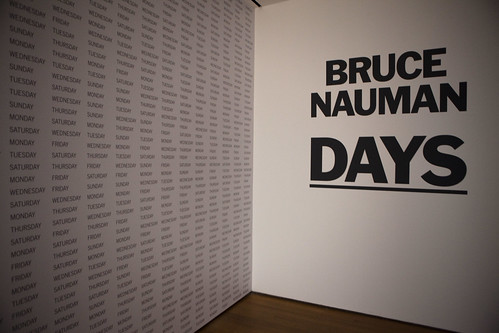
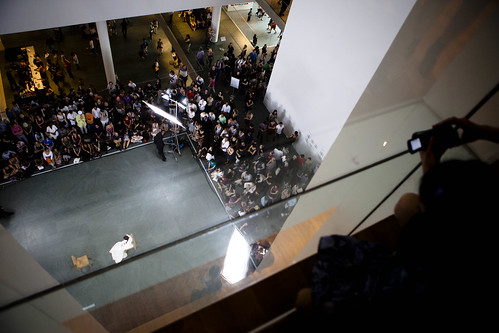
Bruce Nauman: Days at the MOMA

How does the Museum of Modern Art follow up on the success of the incredibly popular (I found it a little bland, but it was sold out almost every day I went) Tim Burton exhibit (the 3rd highest attendance among MOMA exhibits of all time)? By putting what I’m betting will be the least attended of recent MOMA exhibits: Bruce Nauman’s Days, a “sound scuplture” that consists of recorded voices saying the days of the week.

The above picture is not of the incomplete installation of the exhibit. That is the exhibit. I took some video to save everyone else a trip to the MOMA’s third floor:

I don’t claim to be much of an connoisseur, but this strikes me as an exhibit that could’ve been done with headphones. Or maybe the third floor bathrooms while people defecate. I think most people can get their fill of disconnected voices repeating the menial at their average airport.

Luckily, the guards get to wear ear plugs. Or else the MOMA might have had a rash of workplace violence incidents on their hands:
Bruce Nauman: Days at the MOMA

From the MOMA webpage:

A recent addition to the Museum’s collection, Bruce Nauman’s Days (2009) was created for, and debuted at, the 2009 Venice Biennale, where the artist represented the United States with the solo exhibition Bruce Nauman: Topological Gardens. Days is a “sound sculpture” consisting of a continuous stream of seven voices reciting the days of the week in random order. Fourteen suspended speakers are installed in two rows with one voice emanating from each pair of speakers as the visitor passes between them. There are men’s voices and women’s voices, old and young. Some speak swiftly, others with pause, each with his or her own cadence. The collection of distinctive voices produces a chorus—at times cacophonous, at others, resonant—and creates a sonic cocoon that envelops the visitor. The work invokes both the banality and the profundity of the passing of each day, and invites reflection on how we measure, differentiate, and commemorate time.

The stereo box was the most interesting and aesthetically pleasant feature of the exhibit:
Bruce Nauman: Days - Sound Sculpture at the MOMA

Bruce Nauman: Days - Sound Sculpture at the MOMA

Marina Abramović Melts Before Your Eyes

Wrote a quick scrape of the Museum of Modern Art’s gallery of Marina Abramović’s “The Artist is Present”. This is Abramovic’s portrait for the last 68 days (I guess the upload isn’t complete yet).
(Update, all 72 days are up, I’ll get around to updating this. Number 72 is a doozy)

Photos by Marco Anelli. © 2010 Marina Abramović

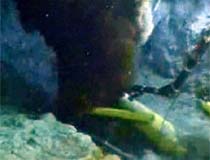
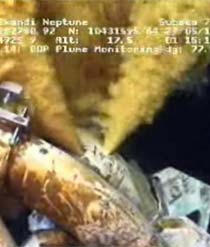
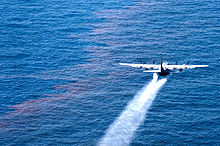
BP, the Gulf Oil Spill, and the Long Road to the Truth; An Illustrated Chart

So now it's obvious to everyone how difficult it is to drill a mile into the ocean for oil and then to fix it for leaks. So when it comes to predicting what happens next, or what is even happening now, maybe we shouldn't be surprised they don't have it down to a science (nevermind the rigorous application process that such a rig must go through). Still, it's fascinating – and a little scary – between what BP and the government say they think they know, and then what turns out to be the truth.

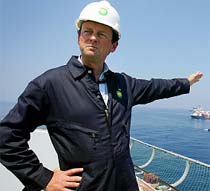
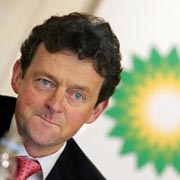
The following chart lists about 20 claims that have been already been either refuted or called into serious question in the last month and a half. This includes the now notoriously low 5000 barrels/day leak estimate, to BP CEO Tony Hayward's optimistic predictions on oil plumes and worker sickness that may turn out tragically off.

Where possible, I've included the dates to show how long it took for a claim to be disputed, and how long it took for the record to be corrected, if necessary. The left side of the chart lists the official statements; the right side lists the disputes and revelations in retrospect. Virtually all of the text below are verbatim selections from the linked sources.

No Oil is Leaking From the Deepwater Rig

April 23

A Coast Guard official said that oil was not spilling from the deep-water well off the coast of Louisiana, apparently easing concerns of a potential environmental disaster days after the explosion left a one-by-five-mile sheen of oil on the Gulf of Mexico.

“It does not appear that oil is emanating from the hole,” said Katherine McNamara, a fireman with the Coast Guard. (NYTimes)

"We've been able to determine there is nothing emanating from the well-head," - Coast Guard Rear Admiral Mary Landry said on Good Morning America.

April 24

Robotic devices monitoring the deepwater well where a giant oil rig exploded and sank last week have discovered oil leaking from the well, a development that a senior Coast Guard official on Saturday called a “game changer.”

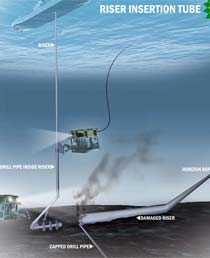
The oil was coming from two places in the riser — the 5,000-foot pipe that connects the well at the ocean floor to the drilling platform on the surface. The rig, the Deepwater Horizon, which sank Thursday 50 miles off the coast of Louisiana, detached from the riser.

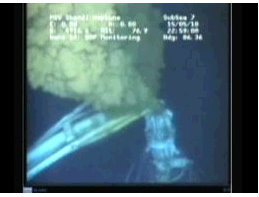
Roughly 1,000 barrels of oil a day are estimated to be emanating from the riser, officials said. They said that both leaks were on the seabed. (NYTimes)

The Blowout Preventer Will Work

April 22

White House energy czar Carol Browner said in an interview she realized the situation was grave when the rig sank on April 22. But BP PLC had assured her that a blow-out preventer atop the well could be used to stanch the gusher, she said. (WSJ)

April 29

In an interview with "Good Morning America", BP COO Doug Suttles said the rig was equipped with some safety devices that should have prevented this kind of spill.

"They didn't do that, we don't know why they didn't do that and ultimately we will find out," he said. (ABC)

April 30

On April 30, [Browner] learned that [blowout-preventer assurance] wasn't so, she said. (WSJ)

A BP official said Friday that the device is designed to be activated by remotely operated submarines if it isn't triggered automatically. For at least the first week, that was the focus of efforts to stop the flow of oil. (WSJ)

Oil is leaking 1,000 barrels/day

April 24

Roughly 1,000 barrels of oil a day are estimated to be emanating from the riser, officials said. They said that both leaks were on the seabed. NYTimes

April 27

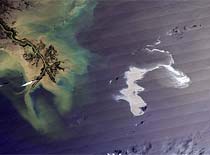
From the SkyTruth blog: We have a visible oil slick covering 2,233 square miles (5,783 km2). Given a minimum thickness of 1 micron (see chart below), that is 5,783 cubic meters of oil, or 1,527,706 gallons (36,374 barrels). The blowout happened almost 7 days ago on April 20. That's at least 5,000 barrels of oil per day. (SkyTruth)

May 17

BP Plc said it is capturing 1,000 barrels of oil a day from a mile-long pipeline connected to its leaking well in the Gulf of Mexico, about a fifth of the estimated flow rate. (Bloomberg Businessweek)

OK, maybe the leak is 5,000 barrels/day

April 28

In a hastily called news conference, Rear Adm. Mary E. Landry of the Coast Guard said a scientist from the National Oceanic and Atmospheric Administration had concluded that oil is leaking at the rate of 5,000 barrels a day, not 1,000 as had been estimated. (NYTimes)

April 29

Suttles told "Good Morning America" he still believes it to be between 1,000 barrels -- the company's original estimate -- and 5,000.

May 14

Robert Dudley, BP’s managing director, told MSNBC on Friday that the 70,000 barrel figure “feels like a little exaggeration, a little bit of scare-mongering...Five thousand [barrels] is a good estimate.” (MSNBC/The Hill)

May 20

"Now that we are collecting 5,000 barrels a day, it might be a little more than that." BP spokesman Mark Proegler told AFP

OK, maybe we're not sucking up 5,000 barrels a day

May 20

"It's now capturing 5,000 barrels per day of oil," BP spokesman Mark Salt, said.

Previously, the company said it was capturing 3,000 barrels (126,000 gallons/573,000 liters) per day. (Reuters)

May 21

A BP spokesman told Reuters news agency on Friday that the company had only siphoned off 2,200 barrels, or 92,400 gallons, in the 24 hours up to midnight on Thursday.

"The flow changes, it's not constant," BP spokesman John Curry said (BBC/Reuters).

USGS: The spill is no more than 19,000 barrels/day

May 27

Based on three separate methodologies, outlined below, the independent analysis of the Flow Rate Technical Group has determined that the overall best initial estimate for the lower and upper boundaries of flow rates of oil is in the range of 12,000 and 19,000 barrels per day. (U.S. Geological Survey)

May 27, May 29

"It would be irresponsible and unscientific to claim an upper bound," Ira Leifer, a researcher at the Marine Science Institute at the University of California, Santa Barbara, said in an interview. Dr. Leifer is a part of the National Incident Command's Flow Rate Technical Group, which produced the estimate.

UC-Santa Barbara issued a statement Thursday in which Dr. Leifer said that "it's safe to say that the total amount is significantly larger" than 12,000 to 19,000 barrels a day. He urged that the statement be issued because "I wanted to stand up for academic integrity," he said in the interview. (WSJ)

Measuring the Oil Spill Flow

May 10

"There's just no way to measure it," said Kent Wells, a BP senior vice president, in a technical briefing Monday. (Environment News Service)

May 13

Richard Camilli and Andy Bowen, of the Woods Hole Oceanographic Institution in Massachusetts, who have routinely made such measurements, spoke extensively to BP last week, Mr. Bowen said. They were poised to fly to the gulf to conduct volume measurements.

But they were contacted late in the week and told not to come, at around the time BP decided to lower a large metal container to try to capture the leak. That maneuver failed. They have not been invited again. (NYTimes)

BP did not respond Thursday to a question about why Dr. Camilli and Mr. Bowen were told to stand down. Speaking more broadly about the company’s policy on measuring the leak, a spokesman, David H. Nicholas, said in an e-mail message that “the estimated rate of flow would not affect either the direction or scale of our response, which is the largest in history.” (NYTimes)

June 3

ProPublica discovers in BP's 582-page Oil Spill Response Plan for the Gulf of Mexico region, BP noted that in the case of an oil spill, determining its size and volume were “critical to initiating and sustaining an effective response.”

BP claimed "worst-case scenario" is 162,000 barrels/day leak

February 2009

In an exploration plan filed with the government in February 2009, BP said it had the capability to handle a "worst-case scenario" it described as a leak of 162,000 barrels per day from an uncontrolled blowout.(AP)

May 11

Bloomberg reports: In a regulatory filing BP made to drill the relief wells it estimates another blowout could release as much as 240,000 barrels of oil a day into the ocean. That’s almost 50 percent more than the company’s worst-case estimate for the first well.

Impact to Beaches

March 2009

In its environmental impact analysis, BP states "An accidental oil spill from the proposed activities could cause impacts to beaches. However, due to the distance to shore (48 miles) and the response capabilities that would be implemented, no significant adverse impacts are expected."

May 24, 2010

[BP CEO] Hayward walked along oil-soaked Fourchon Beach and said he had underestimated the possible environmental effects.

"I'm as devastated as you are by what I've seen here today," Hayward told reporters after he spoke with cleanup workers in white overalls and yellow boots, some shoveling oily sand into garbage cans. "We are going to do everything in our power to prevent any more oil from coming ashore, and we will clean every last drop up and we will remediate all of the environmental damage." (AP)

Oil Floats. Ergo, No Plumes

Because of the depth of the leaking well, and the amount of chemicals used to break up the oil, scientists fear that the oil will slip under surface barriers

May 30

CEO Tony Hayward said the company's sampling showed "no evidence" that oil was suspended in large masses beneath the surface. He didn't elaborate on how the testing was done.

Hayward said that oil's natural tendency is to rise to the surface, and any oil found underwater was in the process of working its way up.

"The oil is on the surface," Hayward said. "There aren't any plumes." (AP)

May 15

BP COO Doug Suttles to CNN: “So if it works as we have seen in the test, it should mean that there’s much less oil on the surface, which means our total dispersant usage will drop significantly and we should be able to monitor or report on that over the next few days.”

May 27

Scientists aboard a University of South Florida research vessel found an area of dissolved oil east of the leak that is about six miles wide, and extends from the surface down to a depth of about 3,200 feet, said Professor David Hollander. (Washington Post)

May 28

James H. Cowan Jr., a professor at Louisiana State University, said his crew on Wednesday found a plume of oil in a section of the gulf 75 miles northwest of the source of the leak.

Cowan said that his crew sent a remotely controlled submarine into the water, and found it full of oily globules, from the size of a thumbnail to the size of a golf ball. Unlike the plume found east of the leak -- in which the oil was so dissolved that contaminated water appeared clear -- Cowan said the oil at this site was so thick that it covered the lights on the submarine.

"It almost looks like big wet snowflakes, but they're brown and black and oily," Cowan said. The submarine returned to the surface entirely black, he said. (Washington Post)

Where in the World is the NOAA Gordon Gunter?

May 15

The NOAA Ship Gordon Gunter, previously scheduled to conduct plankton research in the Gulf of Mexico, is now providing information for oil spill related research NOAA

May 18

The commander of the NOAA vessel that the White House on Friday claimed in a press release "is now providing information for oil spill related research" told [the Huffington Post] on Tuesday that he's actually far away, doing something else entirely.

"We are in the Western Gulf doing plankton research," said Commander Dave Score, reached by satellite phone on his research vessel, the Gordon Gunter. "So I really don't know. I'm just on orders." (Huffington Post)

Testing the Cement Seal

A poor cementing job is one theory for how explosive gas escaped. BP claims it was unaware of any problems.

May 25

BP told the Wall Street Journal that the tests weren't run because they were needed only if there were signs of trouble in the cement job, and the work seemed to go smoothly.

May 25

In a memo to Congress, BP's internal investigation found that "the float collar used in the cementing process did not initially operate as intended and required nine attempts with higher than usual pressures to function properly. Moreover, the float test performed after cementing may not have been definitive, leading to concern that there may have been contamination of the cement due to density differences between the cement and the drilling mud." (NOLA Times-Picayune)

Who was the Decider on Deepwater?

April 29

BP COO Suttles was quick to point out that another company was operating the rig at the time of the explosion, not London-based BP.

April 30

"This was not our accident," CEO Hayward told Reuters.

"I can say that we had equipment required by the regulations," he said. "We don't know why, when the accident occurred, and I should probably clarify, the lease we are drilling on is owed by BP and a few other companies." ABC News

May 3

"This was not our drilling rig, it was not our equipment, it was not our people, our systems or our processes," CEO Hayward told the FT/BBC.

May 16

In an interview with 60 Minutes, Deepwater Horizon survivor Mike Williams claimed that BP managers had overruled Transocean in the well-sealing process:

In the hours before the disaster, Deepwater Horizon's work was nearly done. All that was left was to seal the well closed. The oil would be pumped out by another rig later. Williams says, that during a safety meeting, the manager for the rig owner, Transocean, was explaining how they were going to close the well when the manager from BP interrupted.

"I had the BP company man sitting directly beside me. And he literally perked up and said 'Well my process is different. And I think we're gonna do it this way.' And they kind of lined out how he thought it should go that day. So there was short of a chest-bumping kind of deal. The communication seemed to break down as to who was ultimately in charge," Williams said. (60 Minutes)

May 26

The rig's chief mechanic, Transocean's Douglas Brown, testified: "I recall a skirmish taking place between the company man... and the tool pusher and driller concerning the events of the day. The driller was outlining what was going to be taking place. Whereupon the company man stood up and said 'No. We have some changes to that.'"

May 21

The two BP executives read from a part of Transocean's Emergency Response Manual for the rig, emphasizing sections that stated that Transocean's offshore installation manager was "fully responsible" for activities onboard the rig, and BP's representative was there to "assist." (WSJ)

May 21

In response to BP's claims, Transocean provided The Wall Street Journal with a complete copy of the manual's well-control section. The well-control section stated that top managers on the rig for both BP and Transocean were supposed to jointly decide whether the situation was deteriorating to a point where they might lose control of the well. (WSJ)

"No Precedent" of Blowout Preventers Failing

May 3

"This is an unprecedented accident in terms of the failure of the blowout preventer. It is the ultimate safety system on any rig, and there is no precedent for them failing. So to get to this point, you've had to breach multiple safety systems and then have the ultimate device fail. So there is no precedent for failure" CEO Hayward told NPR

May 8

Accident reports from the U.S. Minerals Management Service, a branch of the Interior Department, show that the devices have failed or otherwise played a role in at least 14 accidents, mostly since 2005.

In 1999...an MMS-commissioned report by a research group identified 117 blowout preventer failures at deepwater rigs within the previous year. These breakdowns created 3,638 hours of lost time - a 4 percent chunk of drilling time.

In 2004, an engineering study for federal regulators said only 3 of 14 new devices could shear pipe, as sometimes required to check leaks, at maximum rated depths. Only half of operators accepting a newly built device tested this function during commissioning or acceptance, according to the report.

"This grim snapshot illustrates the lack of preparedness in the industry to shear and seal a well with the last line of defense against a blowout," the report warned. (Associated Press)

Top Kill, First Try

May 27, 5:43 a.m.

"Top kill" operations continued over the night & are ongoing. There are no significant events to report at this time. @BP_America

"It's moving the way we want it to, but it's too early to say" BP Managing Director Robert Dudley to NBC's Today Show.

"The fact that we had a bunch of mud going up the riser isn't ideal but it's not necessarily indicative of a problem," said spokesman Tom Mueller (MSNBC)

May 28, 7:00 AM

"Nothing has gone wrong so far" BP CEO Hayward tells CBS "The Early Show." Correction: This item had been mistakenly dated as May 27

May 26, 11 p.m.

Operation began and was suspended after about 10 hours (NYTimes)...It was not until late afternoon that BP acknowledged that the operation was not succeeding and that pumping had halted at 11 p.m. Wednesday (NYTimes).

Top Kill, Second Day

May 28

“We have some indications of partial bridging, which is good news.” - BP CEO Hayward tells CNN.

May 28

BP suspended pumping operations at 2:30 a.m. Friday after two “junk shot” attempts to plug the leak with rubber and other materials, said a technician working on the operation, who spoke on condition of anonymity because he was not authorized to speak publicly about it, reported the New York Times

A technician said that despite all the injections, at various pressure levels, engineers had been able to keep less than 10 percent of the injection fluids inside the stack of pipes above the well. (NYTimes)

May 29

"I don't think the amount of oil coming out has changed...Just by watching it, we don't believe it's changed." - BP chief operating officer Doug Suttles (Reuters)

Reporters received a note from a BP spokesman saying information on the top kill is now considered "stock-market sensitive" and updates can be provided only in "formal settings," though BP's CEO made the rounds of morning news shows after that to talk about it. (CBS News)

Media Access

May 20

BP and Coast Guard don't have any rules that prohibit media access. Please see USCG response to the story here http://bit.ly/ae8cZ1 #BP (@BPAmerica)

May 22

"Neither BP nor the U.S. Coast Guard, who are responding to the spill, have any rules in place that would prohibit media access to impacted areas and we were disappointed to hear of this incident. The only time anyone would be asked to move from an area would be if there were safety concerns, or they were interfering with response operations. This did occur off South Pass Monday which may have caused the confusion reported by CBS today." (Coast Guard press release)

May 2

According to a contract obtained by News21, cleanup workers had to sign a contract, efective May 2, agreeing not to speak to the media or risk losing their jobs. The gag clause was apparently rescinded on May 24, according to News21.

May 25

Belle Chasse, La.-based Southern Seaplane Inc., which was scheduled to take a New Orleans Times-Picayune photographer for a flyover, says it was denied permission once BP officials learned that a member of the press would be on board. (Newsweek)

Testing the Blowout Preventer

April 28

Mr. Hayward said the blowout preventer was tested 10 days ago and worked. He said a valve must be partly closed, otherwise the spillage would be worse. (NYTimes)

May 29

The New York Times reports: Company officials asked for permission to delay their federally mandated test of the blowout preventer, which is supposed to occur every two weeks, until the problems were resolved, BP documents say...When the blowout preventer was eventually tested again, it was tested at a lower pressure — 6,500 pounds per square inch — than the 10,000-pounds-per-square-inch tests used on the device before the delay. It tested at this lower pressure until the explosion.

To be fair, Hayward only claimed that the blowout preventer passed a test. He didn't say the test itself hadn't changed.

How Far Was BP Drilling?

BP's permit allowed it to drill to 20,000 feet deep.

Lawyers representing groups suing BP claim that "at least one worker who was on the oil rig at the time of the explosion on April 20, and who handled company records for BP, said the rig had been drilling deeper than 22,000 feet." (NYTimes)

“The allegation surrounding the permitted depth is factually incorrect,” said Andrew Gowers, a BP spokesman. Mr. Gowers said that the rig was permitted to drill to 20,211 feet and that it drilled to 18,360 feet. (NYTimes)

Workers Bused in for Pres. Obama Photo Op?

May 28

Early Friday morning, "a number of buses brought in approximately 300 to 400 workers that had been recruited all week," Jefferson Parish Councilman Chris Roberts told CNN's "Situation Room." Roberts said the workers were offered $12 an hour to come out to the scene at Grand Isle and work in what he called a "dog and pony show."

But, when Obama departed, so did the workers, he said, adding that he's never seen more than 20 workers at the Grand Isle cleanup site since the effort started. (CNN)

"The sheriff's office did manage to get one person to speak with them and that individual said they were hired yesterday and told to report to a staging area at 7:30 this morning," Roberts added. "It just doesn't add up."

May 28

BP COO Doug Suttles downplayed the claim Friday evening, telling CNN it is not unusual to see people wrapping up work in the afternoon. (CNN)

Cleanup Workers Getting Sick

BP has used hundreds of thousands of gallons of chemicals to disperse oil in the water. The chemicals have been banned in the UK and have been linked to illness in humans at high doses.

May 31

BP CEO Hayward to CNN: "I'm sure they were genuinely ill, but whether it was anything to do with dispersants and oil, whether it was food poisoning or some other reason for them being ill," Hayward said. "You know, food poisoning is clearly a big issue when you have a concentration of this number of people in temporary camps, temporary accommodation. It's something we have to be very, very mindful of. It's one of the big issues of keeping the army operating. You know, armies march on their stomachs." (Times-Picayune)

April 30

The exact makeup of the dispersants is kept secret under competitive trade laws, but a worker safety sheet for one product, called Corexit, says it includes 2-butoxyethanol, a compound associated with headaches, vomiting and reproductive problems at high doses.

“There is a chemical toxicity to the dispersant compound that in many ways is worse than oil,” said Richard Charter, a foremost expert on marine biology and oil spills who is a senior policy advisor for Marine Programs for Defenders of Wildlife.

ProPublica

Marina Abramović’s Last Sit at the MOMA

MOMA: Last Day for Marina Abramović

MOMA: Last Day for Marina Abramović

Today was the last day of the phenomenal performance art retrospective by Marina Abramović (“The Artist is Present”). I missed the hijinks, and it didn’t make me cry, but I’m wondering if I will ever enjoy an exhibit at the MoMA as much as Abramović’s. Since its opening week, I’ve seen it at least a half-dozen times, each time noticing something new (some of the exhibits are video recordings as long as an hour).

It was the type of art that sounds like attention-seeking drek if you try describing it (“She’s naked and she walks into a wall really fast. She’s naked and she cuts a pentgram in herself. She’s naked and she dances until she faints!”). But the MoMA did a masterful job of arranging her work; what could’ve been a simple cheap thrill (like brushing past two naked models to get into the exhibit) became a profound and sensical ensemble of her life’s work.

The New York Times describes a brief roundup of her work (the author, Holland Cotter, is dismissive of the MoMA’s restaging of her work, mostly because Cotter thinks that the unpredictability of Abramovic’s art is what gave it its power. I’d be inclined to agree if I hadn’t heard of her before now):

Her solo work from the early 1970s was hair-raisingly nervy. She stabbed herself, took knockout drugs, played with fire. For one piece she stood silent in a gallery for six hours, having announced that visitors could do anything they wanted to her physically. At one point a man held a gun to her neck. Her eyes filled with tears, but she didn’t flinch.

In 1976 she started collaborating with the German artist Uwe Laysiepen, known as Ulay. Some of their performances were punishing athletic events, as they slammed their bodies together or into walls. Others were almost aggressively passive. For a piece called “Imponderabilia” they stood facing each other, nude, in a narrow doorway in a museum. Anyone wanting to go from one gallery to another had no choice but to squeeze awkwardly and intimately between them.

MOMA: Last Day for Marina Abramović

MOMA: Last Day for Marina Abramović

MOMA: Last Day for Marina Abramović

MOMA: Last Day for Marina Abramović

Hypertext-Wired Brains and Irrelevancy

Something tells me that these two areas of study, unfortunately, have interrelated results:

From Wired, “The Web Shatters Focus, Rewires Brain” (Nicholas Carr):

Research was painting a fuller, very different picture of the cognitive effects of hypertext. Navigating linked documents, it turned out, entails a lot of mental calisthenics—evaluating hyperlinks, deciding whether to click, adjusting to different formats—that are extraneous to the process of reading. Because it disrupts concentration, such activity weakens comprehension. A 1989 study showed that readers tended just to click around aimlessly when reading something that included hypertext links to other selected pieces of information. A 1990 experiment revealed that some “could not remember what they had and had not read.”

From the New York Times, “The Impact of the Irrelevant on Decision-Making“:

An intriguing example of transparently irrelevant information that affects behavior comes from a 1974 report on an experiment by the psychologists Daniel Kahneman and Amos Tversky. In the experiment, subjects first spun a wheel that supposedly would stop at random on any number between 1 and 100. Then they were asked what percentage of African countries belongs to the United Nations. For one group of subjects, the wheel was rigged to stop on 10; for a second group, on 65. On average, the first group guessed that 25 percent belong to the United Nations, but the second group guessed 45 percent.

In short, even demonstrably false or irrelevant information can influence judgments, which in turn influence decisions. In such cases, Professors Tversky and Kahneman wrote in 1981, “the adoption of a decision frame is an ethically significant act.”

On a sidenote, also from the Wired article, this makes you wonder about print media’s early attempts to do news video:

In a study published in the journal Media Psychology, researchers had more than 100 volunteers watch a presentation about the country of Mali, played through a Web browser. Some watched a text-only version. Others watched a version that incorporated video. Afterward, the subjects were quizzed on the material. Compared to the multimedia viewers, the text-only viewers answered significantly more questions correctly; they also found the presentation to be more interesting, more educational, more understandable, and more enjoyable.

Marine Sgt. Tyler Ziegel, Photog Nina Berman at the Whitney

Jan. 2, 2012: Tyler Ziegel passed away on Dec. 26, 2012. He was 30. The Peoria Journal Star has a story about his funeral. RIP Tyler.

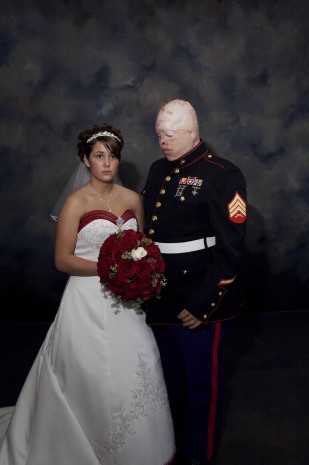
Tyler and Renee. Photo by Nina Berman

Stopped at the Whitney Biennial last night at around 2am (it’s been open on a 24 hour schedule this week). The modern art at the Whitney may be too modern for me and my MoMA-loving-style, but there were a couple rooms of powerful documentary photography, including Nina Berman’s 2006 World Press Photo Portraiture winner, of Marine Sgt. Ty Ziegel.

Even if the Whitney isn’t your kind of art, the Berman exhibit is worth a visit this Memorial Day weekend.

Ziegel suffered burns over his entire body after a suicide bomb attack in Iraq. Berman’s award winning photo was of Ziegel, then 24, and his 21-year-old bride, Renee, getting their wedding portrait taken at the studio. I don’t know what the official portrait ended up being, but Berman’s take, with the bride’s haunted expression, turns the cliched-wedding-portrait on its head. Read a Salon Q&A here.

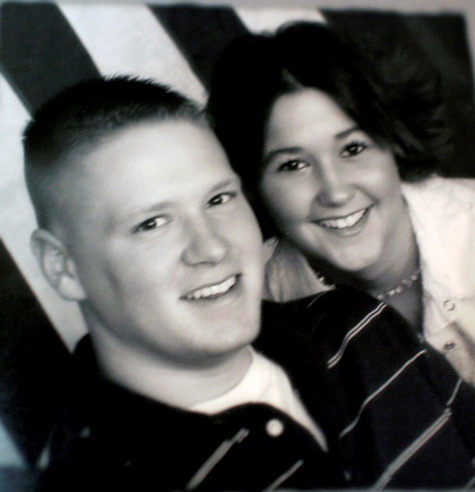
Tyler and Renee, before IraqI remember seeing that photo in the awards gallery, but the Whitney exhibit featured more than a dozen photos of Ziegel’s life, then during the wedding, and then a follow-up in 2008.

Their marriage on Oct. 7, 2006 was hailed as an example of the power of love: two high school sweethearts making the commitment despite Ziegel’s disfigurement. That day was declared a state holiday: “Renee and Tyler Ziegel Day”.

Despite everyone’s hope for a happy ending, they divorced the following January. A Times of London profile in 2008 resignedly states, “It turns out love doesn’t conquer all. It’s a myth.”

In the Salon Q&A, Berman talks about how Ziegel’s sense of humor persevered:

I asked Ty, what do little kids say? Do little kids get scared? In my book, I’d photographed a really severely burned soldier. And when I was with him I’d see kids shy away and he would smile at them.

Ty would just laugh — he’s got a great sense of humor. Kids would say, “What happened to your ears?” and he’d say, “The bad guys took ’em.” They’d say, “What happened to your nose?” and he’d say, “The bad guys took it.” I guess he tried to make some little game out of it to deal with it.

In the Times UK profile, the author writes of the difficult time faced by both Tyler and Renee:

Most of the time, [Buddy Robison, Tyler’s best friend] and Ty talk about music. And, like Becky, he isn’t worried about Ty moving on and falling in love again. “Someone will see through his skin and see his heart,” he says. And what of his own personal feelings about Renee? Buddy smiles. “That’s a hard question.” He takes his time before answering, choosing his words with care.

“I respect her a lot for sticking by Ty’s side. Moving to San Antonio? she helped him through the hardest time in his life

“Before he got blown up, we were both shy. We were exactly alike. Now he’s not afraid to go up to someone he doesn’t know and talk to them. He doesn’t hide. Obviously, people look, but he walks straight ahead.”

There has only been one incident where there’s been trouble. A little over a year ago they were leaving a bar and a bunch of local college kids made fun of Ty. There was a fight.

“They made fun of him, called him a freak. You can’t just brush that off. Someone’s got the audacity to do that to someone who served his country, protecting them?”

Tyler and Renee, Nina Berman

Nina Berman Photography