Author Archives: Dan Nguyen



Who was Yu Yao? Rape-and-homicide case in downtown Flushing (updated)

Yu Yao (CBS NY)
Update 4/28/2011: – Carlos Salazar Cruz, 29, is sentenced to the maximum term of 22-years to life for confessing to the second-degree murder of Yu Yao.
Update 6/1/2010: The accused killer appears in court.
Update 5/28/2010: Chinese residents patrol the neighborhood

I know that nothing in a city as big as New York should shock me, even during a period of record-low violent crime.
But the rape and murder of Yu Yao (also spelled Yau, in some reports), a 23-year-old woman who came over from China just two months ago, was enough to snap me from my normal Monday night routine.
Maybe it was the that-could-be-me element: It was only 9 p.m. on Sunday, May 16 when Yu was attacked, while walking back from the grocery on a relatively busy street in Flushing.
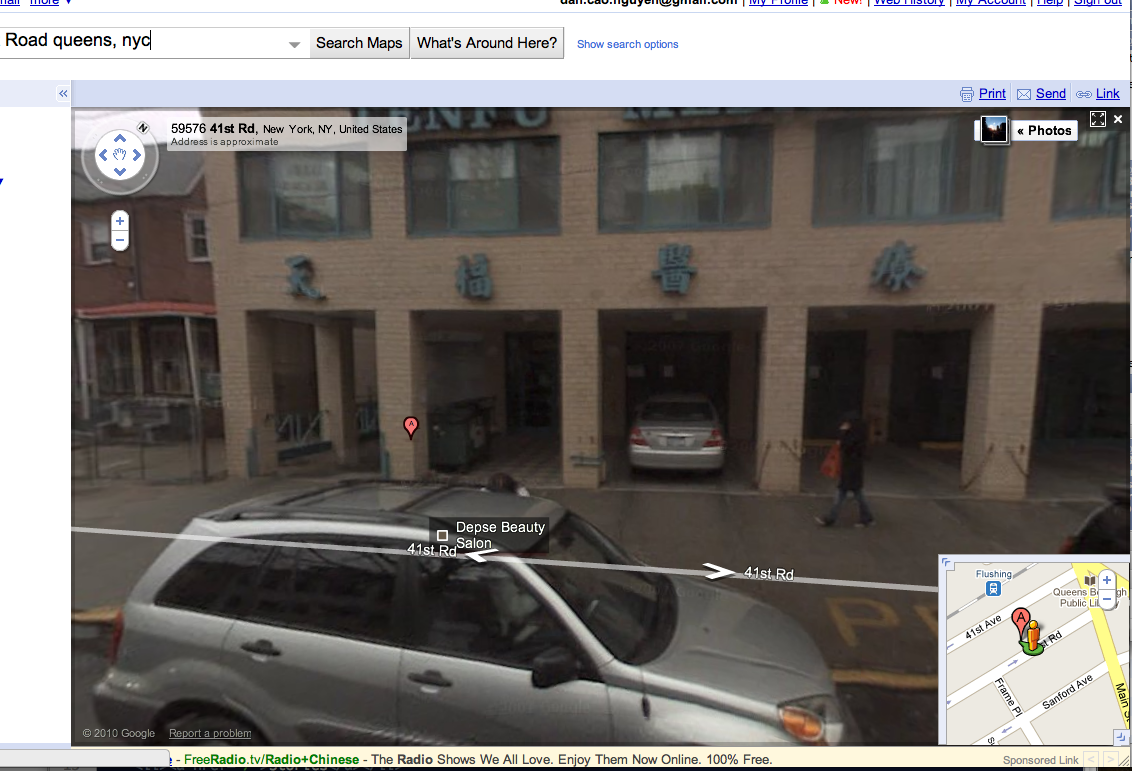
This is where Yao was attacked: 133-23 41st Road in downtown Flushing
Maybe it’s the pure brutality of the killing: Her attacker smashed her face with a pipe, then drug her into an alley to beat and rape her. (some reports say that a surveillance tape shows several passersby apparently ignoring the attack) Yao was in a coma for a week before life-support was pulled on May 22.
Maybe it’s the hard-working immigrant angle. She reportedly moved here just 2 months ago on a student visa to live with a distant uncle, worked in a nail salon, and hoped to become a lawyer. After the attack, authorities frantically tried to find her parents half the world away to tell them what happened. And, presumably, to know whether or not they wanted to keep Yu on life support. As a 23-year-old Chinese citizen, she may have been their only child.
I know Yu’s is just one death out of the hundreds of murders in New York annually. But the news editor in me suggests that this would’ve gotten more coverage if it was a young American woman who had been raped and left brain-dead on a Sunday summer night. Not out of bias, necessarily, but the cultural gulf and language barrier probably makes this story too difficult to cover in a 24-hour-news cycle.
I came to New York on easy circumstances, with a good job and good friends waiting. So I admire anyone who can take the risk of moving to this busy, beautiful but uncaring city, especially from a foreign country. It’s common to fail and leave here because of the expense or the noise or the cold. But to die like that, so cruelly in an alley?
 Carlos Salazar Cruz, the 28-year-old alleged murderer, was also an immigrant. He moved here two years ago from Mexico and worked at a fish market, according to the Daily News. His sister, contacted by the Daily News, said of Cruz: “”He never acted violently….We just don’t know why he would do this. We can’t explain it.”
As someone who covered crime for a short time, I always wondered if I’d become completely desensitized to crime reports. And in New York, enough happens that even a crime like is just a blurb in the papers for a week (also in the local news today, a murder conviction in a triple-slaying at a Newark schoolyard involving guns, machetes, and rape. It was a nationwide story in 2007, but I don’t remember it) . I don’t know whether to feel better that yes, I can still be shocked. Or to be depressed that there is just no upper-limit to horror and tragedy, even when the victim is a complete stranger.
Update (5/28): China’s state English-language paper has a piece on the community activism following Yu’s death. It touches on the long-held perception that Asians won’t fight back:
A week after the rape, several Chinese residents in Flushing teamed up to patrol the neighborhood each weekday night. The team has since expanded to almost 40 members, one-fifth of whom are women, said Zhu Lichuang, president of the New York Chinese Associations Alliance. Zhu started the watch and is one of its volunteers.
“They (the criminals) choose this place because they think Chinese are usually obedient, like carrying cash and prefer to keep silent about incidents,” he said. “So we need to take some actions to show these people that they are wrong.”
Earlier this week, Yu Guihua, Yao’s mother, arrived at Newark airport from Heilongjiang province to the grim news of her daughter’s death. Yao’s father, who is in poor health back in China, has not still been informed.
“My child, you’re so well-behaved, why did you have such a fate,” Yu cried out. “My daughter was very pretty, why did he beat her like that?”
The New York State Assembly’s Grace Meng said several pedestrians witnessed the attack but walked away.
Having lived in Flushing for 23 years, Zhu said the rape case is the “most astonishing” crime he’s heard about in this neighborhood. “It’s not a premeditated crime, which however adds to its seriousness,” he said. “It exposes the problems we have had here for a long time – We Chinese are not unified enough, nor do we care enough about each other.”
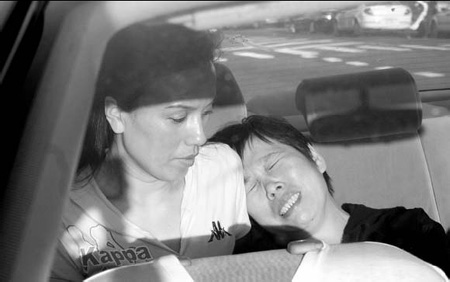
Yu Guihua (right), mother of murder victim Yao Yu, grieves on her way from Newark airport to the hospital where her daughter's body is. (Tan Lixian for China Daily)
Update (6/1): Carlos Salazar Cruz made his first appearance in Queens Supreme Court on June 1, and pandemonium broke loose. Guihua Yu, Yao’s mother, tried to attack Cruz in court, according to the Daily News. Cruz also said in a jailhouse interview with the NYDN that he was too drunk to remember the incident:
“I want to kill that man!,” Guihua Yu wailed repeatedly in her native Mandarin. “I want my daughter back!”
Guihua, 55, tried to pull away by grabbing at a courthouse bench as state court officers moved in.
Later, she was wheeled out of the courthouse on a stretcher and taken by ambulance to a nearby hospital.
During the brief morning hearing in Queens Supreme Court, prosecutors upgraded charges against Carlos Salazar Cruz to second-degree murder for the May 16 attack on Yu Yao, 23.
…
In a jailhouse interview with the Daily News, Cruz claimed he’d been drinking for two days and can’t remember the attack.
“I never wanted to hurt her,” he said. “I never even met her.”
Read more: http://www.nydailynews.com/news/ny_crime/2010/06/01/2010-06-01_mother_of_yu_yao_chinese_immigrant_killed_in_pipe_attack_charges_accused_killer_.html#ixzz0pi3QUoCL

Yao's Family at Newark Airport
Update: 4/28/2011 Nearly a year later, Yu Yao’s killer received his punishment. Carlos Salazar Cruz, now 29, received the maximum sentence of 22-years-to-life in prison for agreeing to plead guilty to second-degree murder. Even though Yu Yao’s murder was one of the too-many terrible crimes in this past year, her story has received significant attention, then, and today. Much of the coverage has focused on the dramatic confrontation between Cruz and Yu Yao’s mother, who had to be granted a special visa in order to both receive her daughter’s body last year and then now, to attend the sentencing of Cruz. The pure senselessness of the murder has not abated with the resolution, however. Cruz, both at the time of his arrest and during his sentencing, professed an inability to understand his actions that night and blamed it on drug use and alcohol.

Guihua Yu breaks down while confronting her daughter's killer
Yao was our sun, our hope, our dreams, our future and our strength,” Guihua Yu told Carlos Salazar Cruz, who sat at the defense table with his head bowed.
“You beast!” she shouted during the nearly 45-minute tongue-lashing.
“I just wanted to be able to hold her and see her. What I saw was a corpse, a dead body,” she mourned.
“You have destroyed our lives,” Yu wailed. “Come back my daughter! My only child. I have lost my child. My child, my child.”
…
Cruz, another immigrant pursuing the American Dream, blamed his troubles on the alcohol and crack cocaine that buoyed him during his forced separation from his wife and child in Mexico.
“I ask for forgiveness,” Cruz said through a Spanish language translator. “God our Lord knows that I am completely repentant for my sins.”
Lincoln Center, Illumination Lawn

Lincoln Center, Illumination Lawn, Green Lawn Roof, Second-Phase Renovation of Central and North Plazas, originally uploaded by zokuga.
Love the option of studying at the library and then resting on the new rooftop lawn, part of a Lincoln Center renovation unveiled this past Friday.
The lawn is the Times’ architecture writer’s favorite part of the renovation, though he dismissed the project as a whole as having a “tacked-on feeling” and “a surprising insensitivity to the way bodies flow through space”. Which is funny, because I think that the lawn, though it looks snazzy to the layman, seems to have an overall strange feel and look in the plaza, and I woud’ve guessed it to be nothing but a gimmick to architecture connoisseurs.
A new two-story structure, which will eventually house new facilities for the Film Society and a high-end restaurant, rises from ground level just to the west of the stair; its roof, covered by a vast, tilting lawn, overlooks the plaza. The project’s most dazzling space, the lawn warps up on two sides, so that climbing it can make you feel as if you were about to float off into the air on a carpet of green.
The Best and Worst Memories
From National Geographic, the story of a woman with the best memory and a man with the worst. “Remember This“:
On a typical morning, EP wakes up, has breakfast, and returns to bed to listen to the radio. But back in bed, it’s not always clear whether he’s just had breakfast or just woken up.
Ever since his sickness, space for EP has existed only as far as he can see it. His social universe is only as large as the people in the room. He lives under a narrow spotlight, surrounded by darkness.
Without a memory, EP has fallen completely out of time. He has no stream of consciousness, just droplets that immediately evaporate. If you were to take the watch off his wrist—or, more cruelly, change the time—he’d be completely lost. Trapped in this limbo of an eternal present, between a past he can’t remember and a future he can’t contemplate, he lives a sedentary life, completely free from worry. “He’s happy all the time. Very happy. I guess it’s because he doesn’t have any stress in his life,” says his daughter Carol, who lives nearby.
h/t longform.org
What’s so Scary About Elena Kagan’s Family?

This Gawker post (“Why Is the White House Hiding Elena Kagan’s Family?“) is tongue-in-cheek, but the NYT City Blog post it refers to leaves you with a little discomfort about the Obama administration’s relationship with a free press.
The New York Times received permission on Tuesday from Hunter College High School in Manhattan, Elena Kagan’s alma mater, to observe a constitutional law class there taught by her brother Irving. We thought it would be intriguing to watch the give and take between Mr. Kagan, who is known as a passionate and interactive educator, and his students on his first day back after witnessing his sister’s nomination in Washington.
Mr. Kagan, who is also a Hunter alumnus, did not have a problem with the idea, a school spokeswoman said, but she added that all media requests now had to be given final approval by the White House.Joshua Earnest, a White House spokesman, said that the administration was “uncomfortable with the idea at this time.†The White House called Hunter, and Ms. Halpern said later Tuesday it could not permit the class observation. A formal proposal has been submitted to the White House, which the administration requested. They asked that it outline the intent and goal of the article in significant detail.
(my emphasis added)
I’m no New York Times-level reporter, but barring an epic gaffe or previously unknown horrible secret about Kagan, it’s hard to imagine that particular reporting exercise resulting in anything more than a typical fluff piece with some cute law-related anecdotes from Kagan’s brother.
So big whoop if the White House doesn’t think it’s worth Kagan’s brother’s time, right?
First, any interview with someone close to Kagan would add more insight to someone who so far has been criticized for being “blank slate.” Kagan has been described as “extraordinarily-almost artistically-careful” about what she has said – for the entire past decade – leaving one court watcher to be at a loss to recall a single person “who has had a conversation with her in which she expressed a personal conviction on a question of constitutional law.” Her paper trail of written articles and essays, according to U. of Colorado professor Paul Campos, can be counted with two hands with a finger to spare.
But the most unsettling aspect of this is how the White House, if the NYT’s account is to be believed, actively hindering reporters. It may very well be that the Irving Kagan has nothing worthwhile to add to what (little) is already known about his sister, but that’s a judgment The Government should not be making for the free press.
Nearly exactly two years ago, a devastating earthquake killed nearly 70,000 in the Sichuan province, including thousands of schoolchildren. The Chinese government blocked reporters from talking to grieving parents. And conceivably, they could’ve phrased their case this way: “A horrible earthquake has killed these parents’ children, and all you care about is pestering them with questions to sell newspapers? What are they going to say but the obvious, anyway? Of course they’re suffering, now leave them alone.”
Fortunately, for the longer-term benefit of the country, the parents did get to be heard. And they didn’t just talk about how tragic the earthquake was, they cursed the corrupt officials who allowed the shoddy construction of the schools that collapsed and killed their children. That was also a story that the Chinese government didn’t think needed to be told.
This isn’t China, and the lives of thousands of schoolchildren doesn’t (hopefully) depend on hearing from Elena Kagan’s relatives. But that’s the point: if Kagan can’t even open up about trivial things, then we can only trust the authorities who picked her that she’s the right person to have a nearly unilateral profound impact American law for the next two to three decades.
There is another avenue of insight to Kagan; she could speak frankly and thoroughly during her Senate confirmation. After all, she did say “it is an embarrassment that Senators do not insist that any nominee reveal what kind of Justice she would make, by disclosing her views on important legal issues.”
But that road seems unlikely to be traveled:
Kagan wrote in 1995 that the confirmation process had become a “charade” because nominees were not answering direct questions, and said they should have to do so.
But during a briefing with reporters in the White House, Ron Klain, a top legal adviser to Vice President Joe Biden who played a key role in helping President Obama choose Kagan, said that she no longer holds this opinion…
“She was asked about it and said that both the passage of time and her perspective as a nominee had given her a new appreciation and respect for the difficulty of being a nominee, and the need to answer questions carefully,†Klain said, prompting laughter from a few reporters.
This is all the more sad when you consider that Kagan is being nominated by a President who, very admirably in my opinion, let embarrassing facets of his life be reported, including his cocaine use. Fuck, he may even be the first President to willing record himself saying (in the context of quoting a friend) “Sorry ass motherfucker.”
And now reporters won’t even be get to hear Kagan’s cousin (re-)reminisce about Elena’s rough-scrabble Upper West Side childhood, growing up in a family that “just really enjoyed debating and discussing everything.â€
For reference sake, I did a quick search through Factiva’s archive to see what was said about Harriet Miers, the Bush Supreme Court nominee who was laughed off the stage, and to whose lack of judicial record Kagan’s is now being derisively compared. I didn’t find much from Miers’ family, but I didn’t see anything in the quick search that indicated the Bush administration was hamfistedly blocking access to Miers’ family (not that existence of such would justify the current White House’s actions).
Here’s one blurb that focused on Miers’ brother:
Miers’ brother says he’s learning more about his private sister
By SHEILA FLYNN
Associated Press WriterDALLAS (AP) – Harriet Miers is such a private person that three days after her nomination to the Supreme Court, even her brother says he is learning things about his younger sister.
Robert Miers, 62, said Wednesday that he’s prodded his sister to tell him about her work with President Bush, but the most she will ever say that she chopped wood with him at the Crawford ranch or jogged with him in Washington.
“She says everything is confidential,” said Miers, who answered the door at his sister’s 4,000-square-foot home in an upper-middle class neighborhood just north of downtown Dallas.
The four-bedroom, three-bathroom brick home and nearly one-acre plot, which includes a tennis court, appraised for $687,860 this year, according to property records. The house, built in 1963, is now on the market.
Robert Miers said his sister bought the house nearly 20 years ago largely for their mother, Sally. Their father, Harris, suffered a stroke while Harriet Miers was in college and died in 1973.
He said their 91-year-old mother has brittle bones and dementia, and when her health took a turn for the worse this summer, she was placed in a nursing home.
Harriet Miers, 60, really hasn’t lived at the home since she went to Washington in 2000, he said. His sister visits Dallas frequently, and the siblings had helped care for their mother along with nurses.
He said his sister’s kind, quiet nature reminds him and his brothers — Dr. Jeb Stuart Miers of Dallas and Harris Miers Jr., of Houston — of their mother.
“There’s a lot of people, including my brothers, that are not as surprised as you might think about the nomination because of the quality of her nature, the beauty of her spirit,” he said.
The family knew Harriet would do important things in her life, but “we never thought it would be the Supreme Court,” he said.
Miers described his sister as a private person, and with all the media scrutiny into her background, even he is learning details he didn’t know, such as closely she advises the president.
But, he believes she has nothing to hide.
“Everything is public record,” he said.
Well, Kagan is no Harriet Miers, in at least one small way.
Whoever thought BP Gulf oil spill to be just 5,000 barrels a day won’t show us the numbers

Another lesson in how an apparent off-the-cuff assumption can become fact, even in this age of instant fact-checking and collaborative research. The New York Times reports:
Two weeks ago, the government put out a round estimate of the size of the oil leak in the Gulf of Mexico: 5,000 barrels a day. Repeated endlessly in news reports, it has become conventional wisdom.
But scientists and environmental groups are raising sharp questions about that estimate, declaring that the leak must be far larger. They also criticize BP for refusing to use well-known scientific techniques that would give a more precise figure.
The figure of 5,000 barrels a day was hastily produced by government scientists in Seattle. It appears to have been calculated using a method that is specifically not recommended for major oil spills.
One of the news reports that repeated the 5,000 barrels/day number was the New York Times itself, which used it as the central assumption in an A1 story that tried to make the case that the spill really wasn’t all that bad
Yes, at just 5,000 barrels, BPs spill wouldn’t make it nearly the worst. But the Times was a little quick to go against the grain their analysis was based on a number that had even been doubted by non-industry experts.
(It also didn’t help that one of groups they quoted downplaying the spill was, as my colleague Marian Wang pointed out, bosom buddies with the drilling industry.)
Now it turns out the 5,000-barrel estimate may be so flawed that the National Oceanic and Atmospheric Administration wouldn’t even tell the Times the numbers it used to make that guess:
The 5,000-barrel-a-day estimate was produced in Seattle by a NOAA unit that responds to oil spills. It was calculated with a protocol known as the Bonn convention that calls for measuring the extent of an oil spill, using its color to judge the thickness of oil atop the water, and then multiplying.
However, Alun Lewis, a British oil-spill consultant who is an authority on the Bonn convention, said the method was specifically not recommended for analyzing large spills like the one in the Gulf of Mexico, since the thickness was too difficult to judge in such a case.
Even when used for smaller spills, he said, correct application of the technique would never produce a single point estimate, like the government’s figure of 5,000 barrels a day, but rather a range that would likely be quite wide.
NOAA declined to supply detailed information on the mathematics behind the estimate, nor would it address the points raised by Mr. Lewis.
Pfizer Data Redux
Updated the code and results to my guide on how to scraper Pfizer’s list of payments to doctors. It now contains a more normalized file that has a line for every doctor and payment. The aggregate totals changed marginally.
Altruists Anonymous: What is the nicest thing you’ve ever done that no one knows about?
AskReddit is just a great place to kill time and learn a lot about life, from people for whom anonymous handles means more about being honest and less about trolling. This thread asking what was the nicest thing you’ve ever done without telling anyone is a tear jerker. Whether or not these were real secrets, it’s interesting/amazing what people can keep to themselves.
Some of my favorites:
mightyelf 212 points
I used to pick up pretty much any hitch hiker I saw. I would even pick up people at the bus stop. It just seemed to me that since I had a car and some free time that it was no big deal to help someone out. I never asked for money or anything like that. It was nice to see the people smile. One day I pickup up a guy about my age( I was 19 at the time) and he was very thankful that I I did. He was telling me about all the stuff he had to do that day and he knew that he would only get 2 or 3 things done because the buses. I had to be at work soon so I asked him if he knew how to drive standard. He looked at me funny and said yes. I pulled into my work and told him to be back here in 12 hours. I gave him $20 for gas and said bye. The guys at work asked me who he was but I didn’t even remember his name from the short time we rode together. They urged me to call the cops but I told them the kid would be back. After my shift ended my car was there. The kid had the biggest smile on his face and as I drove him home he told me how he was able to get everything done and that I had saved him atleast a full day of running around. I saw him from time to time after that. It was nice to hear that because I helped him out he would go out of his way to help others out.
MonkeySpanker 53 points 4 months ago[-]
I won a lawsuit and got about 25k in the bank. I dropped about $8k on my debt, $2k on toys for me (laptop), and the rest went in to paying off debt for friends and family. $8k went to my sister’s credit cards, $2k went to dental work and other kinds of stuff needed for her. $3-5k on a friend who was about to lose his house.
Besides, I’m horrible with my money… I probably would have wasted it on stupid shit anyways.
Line6 27 points 4 months ago* [-]
One day my best friend’s wife told me that she is planning to leave her husband. She wanted me to know in advance so that I can be there for him. Now my friend is one of the decent person I’ve ever known in my life. He loved her like crazy and would have done almost anything. Her wife’s problem was that she was not feeling like a princess. I don’t judge her for that but the guy was working hard to provide his family with some financial stability.
I told her then and there, if she is planning to leave him because she doesn’t love him anymore that can easily be fixed. Just let him know somehow and he’ll make you fall in love with him again but if you don’t want to love him anymore just drop the bomb and leave. She didn’t say anything and left. Next morning I got a text from her that said “Thank You I know now”. They are still married.
euryalus0 31 points 4 months ago[-]
When it looked like he didn’t have much time left, I gave my best friend who had AIDS all my money so that he could take a trip across the country to SF and be with his boyfriend. Only about $1500, but we were both pretty broke at the time. The good news is that after about 10 pretty rough years full of very close calls he is now in pretty good health thanks to the latest meds. (The bad news is we had a pretty major break-up of our friendship about 8 months ago and he hasn’t spoken to me since.) Don’t regret it at all however.
JustATroll 190 points 4 months ago[-]
One of my best friends lost $800 in overdraft fees and didn’t get paid for 2 weeks. They called me crying, I told them to call the bank and see if they can sort it out. Meanwhile, I went to the bank and deposited the amount he said he was missing. To this day he still thinks the bank reversed the overdraft fees. This was like a year ago, and (at least from what he tells me) he’s never overdrafted since.
kr 202 points 4 months ago[-]
I pickup tissues and trash that coworkers (and other folks in the building) throw on the floor in the men’s room before the caretaker goes in to clean.
She caught me once.
atinasutherland 789 points 4 months ago[-]
When I got my settlement check for getting my finger cut off at work I kept $2000 dollars and put the rest in the bank. That night after dinner and drinks I was coming home and saw a homeless man (25-30) that I’ve seen several times before, posted up against a wall near the intersection shivering in the cold. Since there were 3 hotels at that intersection, I stopped, rented a room for a week on my debit card then took the key out of the envelope, replaced it with $1700 and walked over to the gentleman to hand him the key and cash.
No bullshitting, I saw him a month or so later working at a gas station, clean, shaved and nice hair. Im not sure if he recognized me but I’m glad because I recognized him and he appeared to be happy and doing well which said enough. I haven’t seen him in several years but I like to think he’s back on his feet, maybe a family, a house, whatever really but just doing well.
johnbc5 985 points 4 months ago[-]
When I lived in the city an older lady about 90 got her apt robbed in my building. They went in a stole all her cash and took some valuables that she had. She did not have a bank account so the thieves took about 30K the ladies life savings. She was afraid of being evicted for the apt because she wouldn’t have the rent money and did not want to end up in a state run nursing home. I called the landlord and paid her rent in full for the rest if the year, five months worth and told the landlord not to tell her it was me. I also had groceries delivered to her once a week for the next two months until she had some money saved from her social security checks. I never told anyone what I had done for her and I don’t think she even knew my name because the apt building had about 50 apartments in it. The landlord was I only one who knew and he wanted to tell her what I was doing but I told him that I would deny it. I did not want her to feel indebted to me. She posted a letter in the lobby of the building to thank who ever had helped her. I took the letter down and kept it. The landlord still writes to me every few months to tell me how she is doing. She is still living in the apt seven years later. I never told any one.
I’d like to think I’ve done equally selfless things and that I don’t remember them off the top of my head because I don’t have anyone else who knows to refresh my memory. One time I drove a drugged-out homeless man who was making a scene at Starbucks to the nearest Methadone clinic, but that’s mostly because I didn’t have anything to do that morning.
Birth Control? There’s an iPad app for that.

The baby products label, Pampers, put out a free app called “Hello Baby” which lets you input your baby’s info, get a week-by-weeky depiction of what it looks like in the momma, and then probably reminds you on the baby’s birthdate to buy Pampers.
It’s great, actually, to see the real-life size of a four-week old embryo. But bringing the iPad to the bar and showing everyone the real-size of a 20+ weeks-old fetus, that might prevent a lot of unwanted (and wanted) pregnancies from even starting.
Bercovici on 4G-iPhone: Apple could sue Gawker for buying “stolen goods”
DailyFinance’s Jeff Bercovici makes a compelling case that Gizmodo opened itself to criminal and civil penalties by paying someone $5,000 for the “found” iPhone prototype. He argues that California law compelled the finder, and Gizmodo, to make good-faith efforts to find the owner. Gizmodo’s efforts to return the device (before taking it apart and making millions of page hits from it) were at best, lazy and uninterested, and worst, nominal for the sake of covering-their-asses in a legal suit, Bercovici writes:
At heart is the question of whether the person who found the phone made “reasonable and just efforts to find the owner and to restore the property to him,” as required by the California penal code. In its account of what happened, Gizmodo says the finder “asked around” the bar where he found it. And after realizing it was an Apple prototype, he called several numbers at the company.
What he never did, however, was notify anyone who worked at the bar, according to its owner, Volcker Staudt. That would have been the simplest way to get the phone back to the Apple employee who lost it, who “called constantly trying to retrieve it” in the days afterward, recalls Volcker. “The guy was pretty hectic about it.”
Nor did the finder report it to the Redwood City Police Department, says Sgt. Dan Mulholland. To be fair, no one from Apple told the police the phone was lost, either. I contacted a company spokeswoman to ask why not but never heard back.
…
And make no mistake: In this case, it was up to Gawker to establish that the seller legally possessed the property. Paul J. Wallin, a founding partner at the California law firm Wallin & Klaritch, offers an analogy. “If you purchase a Rolex watch at a swap meet for $200, a reasonable person would be put on notice that it might be stolen goods,” he says. The buyer would thus be required to take extra measures to determine that it wasn’t.
When I asked Denton what steps his company took to ensure that the seller had, in fact, made a good-faith effort to return the phone to Apple before shopping it around, he redirected the question. “We weren’t convinced the phone was even a genuine prototype until the weekend [ie. after Gizmodo bought and dismantled it],” he said. “And we didn’t discover the name of the Apple engineer who lost it until Monday. We called him and — after Apple officials got back to us — we returned the device to them.”
After further reflection, Bercovici is even more committed in his stance:
I understand the moral calculus they used. We all feel intuitively that picking up something that someone else left behind is not as bad as seizing it by force, stealth or deception. But in the eyes of the law, it’s still stealing. And buying stolen goods is a crime. In those rare cases where a journalist commits a crime and receives the benefit of prosecutorial discretion, it’s usually because he can demonstrate there was a compelling public interest at stake. There is no such interest here. The only parties who benefited from Gizmodo’s story are Gawker Media and Apple’s competitors.
It’s hard for me to pick a horse in this race. I’m a frequent reader of Gawker, though Gizmodo turned me off for awhile with their remotely-tampering-with-CES-displays stunt, and I most definitely read through their iPhone dissection (I also thought Giz had the best iPad app coverage). I think Bercovici is right, but if Giz is the purveyor of stolen info, then I definitely didn’t take the moral high ground by avoiding it.
On the other hand, I hope that if this disclosure can be shown not to have hurt Apple’s bottom line, I hope they ease up on their infamous, and now-tiringly-overdone commitment to secrecy. Not for the sake of its info-hungry fans, but for the workers employed by police-state-like distributors.